If you are thinking about buying a home on Whidbey Island, the first decision is not which house. It is which town.
Whidbey is the longest island in Washington State, and the six communities along its 55-mile length are genuinely different from each other. Oak Harbor and Langley are 35 miles apart and feel like different worlds. Coupeville and Freeland are 16 miles apart but attract different buyers. Choosing wrong does not just mean overpaying. It means living somewhere that does not fit the way you actually want to spend your days.
I have lived on Whidbey Island for more than 20 years and have closed over 150 transactions across every town from Oak Harbor in the north to Clinton at the south end. This guide is what I tell clients during their first phone call: a real comparison of the six towns, with the price ranges, school options, ferry realities, and lifestyle trade-offs that actually drive the decision. I have tried to be honest about the parts that matter, including the ones that do not always show up on a tourism website.
If you already know which town you want, the quick table above is probably enough. If you are still deciding, the rest of this guide walks through each town in detail, then offers a decision framework at the end.
Before You Pick a Town | Four Questions to Answer First
In my experience, the right Whidbey town for a buyer is rarely the one they walked in expecting. The conversations I have with new clients almost always start with where they think they want to live and end somewhere else after we have worked through a few practical questions. Here are the four that matter most.
1. How often will you actually leave the island?
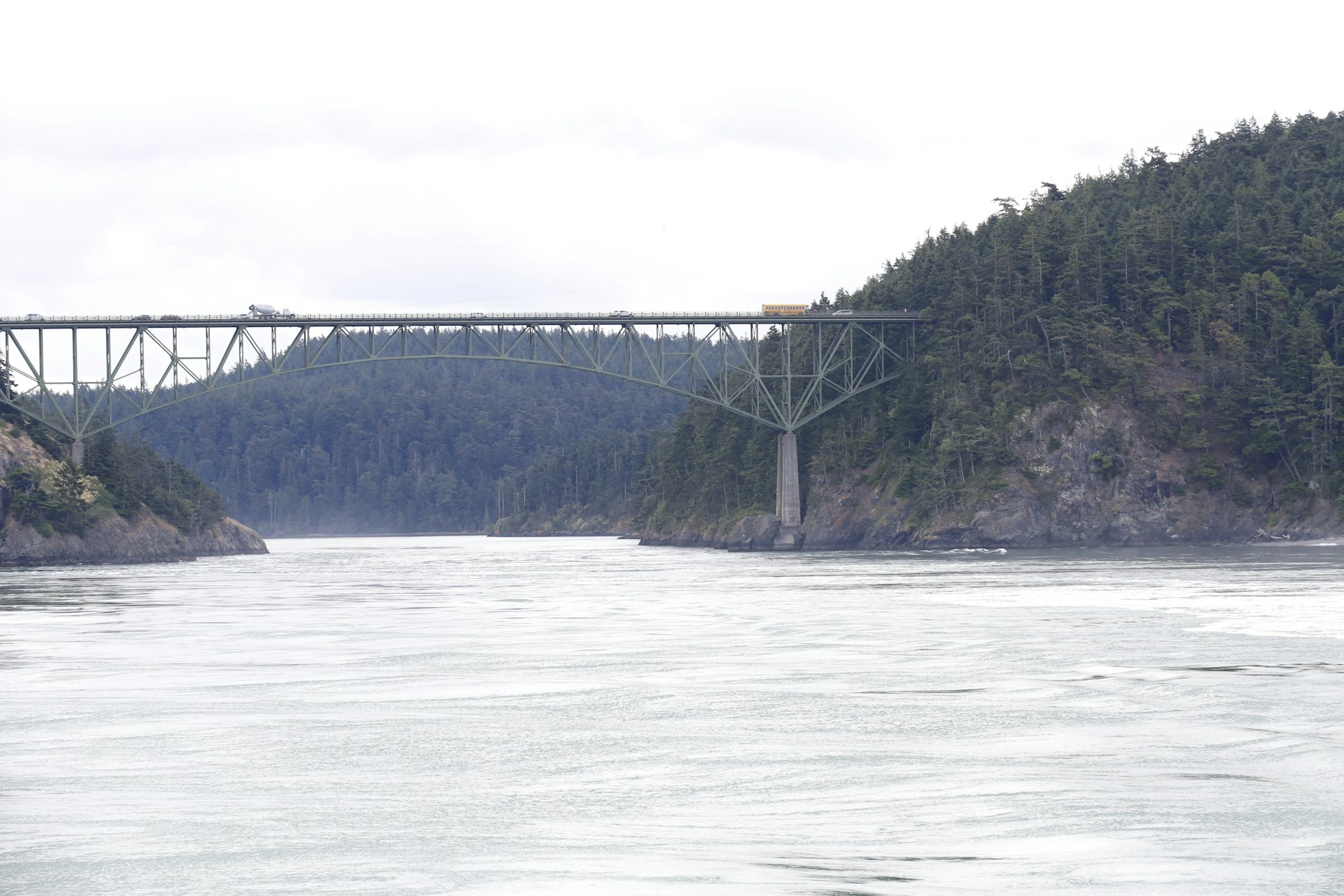
This is the single most important question, and most buyers underestimate it. If you need to be in Seattle, Bellevue, or Sea-Tac more than once a week, your town selection is essentially decided for you: you want Clinton, the south end of Langley, or possibly Freeland, because the Mukilteo to Clinton ferry is your daily life. If you only need to leave the island once a month or less, the entire north and central portion opens up, because Deception Pass Bridge gives you a permanent road connection that ignores ferry schedules entirely.
2. Do you want a village or do you want a setting?
A village means walkability. You walk to coffee, to dinner, to the library, to the bookstore. The two towns that genuinely deliver this are Langley and Coupeville. Oak Harbor's Pioneer Way is improving but is not at that level yet. The other three towns offer something different: a setting, which usually means a wooded lot, a beach community, an acreage parcel, or a view, but daily life happens in the car. Both options are great. They are just not the same option.
3. Where does your healthcare come from?
Whidbey Health Medical Center in Coupeville is the only full-service hospital on the island, and for retirees and anyone managing ongoing health conditions, the drive to it matters. From Coupeville itself, it is five minutes. From Oak Harbor or Greenbank, about 15. From Freeland or Langley, about 25 to 30. From Clinton, about 35 minutes. Specialty care often means a ferry crossing or a drive to Bellingham or Seattle. If healthcare access is a major factor, it changes the math considerably.
4. What is your honest budget, including the things that come with island life?
Whidbey is more affordable than King County, but it is not cheap. Beyond the purchase price, factor in higher insurance for waterfront, septic and well maintenance for rural homes, ferry costs if you commute, and the genuine reality that finding contractors, plumbers, and electricians on a small island can mean longer waits and higher rates than mainland prices. The towns with the most accessible price points are Oak Harbor and Clinton. The towns where premium pricing is the norm are Langley and Greenbank.
Oak Harbor
Oak Harbor sits at the north end of the island and is by far the largest community on Whidbey, with about 24,600 residents. The economy is anchored by Naval Air Station Whidbey Island, which brings approximately 8,000 active-duty personnel and 16,000 family members to the area. That military presence shapes nearly everything about the Oak Harbor real estate market: steady demand, lower vacancy rates, predictable three-year rotation cycles, and a buyer pool that includes a steady stream of VA-financed transactions.
The typical home value in Oak Harbor sits around $525,000, the most affordable in any Whidbey town. You can find condos and townhomes near downtown starting in the high $200,000s, established single-family homes from the high $400,000s to the mid $700,000s, and waterfront from about $1 million to over $2.5 million. The Oak Harbor School District is the largest on the island with about 5,500 students and offers wide AP course access, athletics, and a nationally recognized JROTC program.
What I tell buyers honestly about Oak Harbor
The base brings jet noise. EA-18G Growler aircraft train out of NAS Whidbey, and depending on which neighborhood you choose, you will hear them on a regular basis. Most longtime Oak Harbor residents barely notice it, but newcomers should spend an afternoon in the neighborhood they are considering before they buy. The downtown Pioneer Way revitalization is real but ongoing, so do not expect a Langley-level village experience yet. Deception Pass Bridge gives Oak Harbor something no other Whidbey town has: a permanent road connection to the mainland with no ferry dependence.
Oak Harbor is the right choice for active-duty military, veterans, families looking for value, retirees who prioritize healthcare proximity (the hospital is only 15 minutes south), and buyers who simply want more home for the money than the south end offers.
Coupeville
Coupeville is the second-oldest town in Washington State (only Steilacoom predates it), the county seat of Island County, and the only town in the United States entirely surrounded by a national historical reserve. With about 1,950 residents, it is small, but it is genuinely historic in a way that very few Pacific Northwest towns can claim. Front Street is on the National Register of Historic Places, and the storefronts you walk past on the waterfront have been there, in some cases, since the 1880s.
Ebey's Landing National Historical Reserve surrounds the town with 17,572 acres of protected farmland, prairie, and shoreline, which means the rural character of Coupeville will not be developed away. This protection is also why a Coupeville home has held its value the way it has. The typical home value is around $675,000. Penn Cove waterfront, especially along Madrona Way on the north shore, runs from $1.2 million to over $3 million. Whidbey Health Medical Center is in Coupeville itself, which makes the town a particularly strong fit for retirees.
What I tell buyers honestly about Coupeville
Inventory is tight. There are only so many homes in Coupeville, and many of them turn over within families or stay listed only briefly before going under contract. If you are set on Coupeville, you need to be ready to move quickly when the right property appears. The historic district also has design review for exterior changes on protected structures, which is something a few buyers underestimate during the offer process. On the upside, the limited inventory and protected surroundings have created one of the most consistently appreciating small markets in the Puget Sound region.
Coupeville is the right choice for history-minded buyers, retirees who want walkability plus immediate hospital access, second-home buyers from the Seattle metro, and anyone willing to wait for the right property in a market where the right property is genuinely rare.
Greenbank
Greenbank is the smallest of the six communities and the only one that is not anchored by a village core. It is a rural, dispersed community at the geographic narrows of Whidbey Island, where the land is less than two miles wide and you can stand on one shoreline and see across to the other. Greenbank Farm, a 522-acre former loganberry farm preserved as a community arts and trails destination, functions as the de facto town square.
The typical home value sits around $725,000. Greenbank is where you go on Whidbey for acreage. Most properties are on parcels of one acre or larger, with significant inventory at three, five, and ten-plus acre sizes. Direct waterfront at Lagoon Point on the west side or Holmes Harbor on the east side can range from $900,000 to over $2 million. The community is split between the Coupeville and South Whidbey school districts, with the dividing line running through the central part of the area, so buyers with school-age children should always verify the assignment for the specific property they are considering.
What I tell buyers honestly about Greenbank
There are no grocery stores in Greenbank, no banks, and limited dining beyond the Whidbey Pies Cafe at Greenbank Farm. Daily errands mean driving 10 minutes south to Freeland or 15 minutes north to Coupeville. For some buyers, that is exactly the appeal. For others, it becomes a daily friction. Cell service can be inconsistent in parts of Greenbank, and some rural properties have water, septic, or driveway access situations that warrant careful due diligence. None of this is unusual for rural Whidbey, but it is worth knowing.
Greenbank is the right choice for buyers who want privacy, acreage, hobby farms, equestrian properties, dual-shoreline access, or simply more land than any other Whidbey town can offer at a comparable price.
Freeland
Freeland is the largest unincorporated community on the island and the practical center of South Whidbey, with about 2,250 residents. If you draw a line through every type of business and service that the south end of Whidbey relies on, Freeland is where you find most of them: Payless Foods (the main South Whidbey grocery store), the public library, healthcare clinics, banks, hardware, professional services, and the deepest cluster of restaurants on the south end.
The typical home value is around $650,000. Freeland has the most varied inventory of any Whidbey town, spanning condos near downtown starting in the high $400,000s, Useless Bay Country Club homes (the only private 18-hole golf community on the island) from the mid $700,000s to over $1.3 million, Holmes Harbor waterfront on the protected east side, Sunlight Beach on the open west side at Useless Bay, and inland lake homes at Goss and Lone Lake. Freeland is also the closest South Whidbey town to the Clinton ferry, about 20 minutes away.
What I tell buyers honestly about Freeland
Freeland is not pretty in the way Coupeville and Langley are. Highway 525 runs straight through it, and the commercial corridor along the highway has the strip-mall character that a lot of Whidbey buyers came to the island to escape. The trade-off is that everything you need is there. Bayview, the small historic village on the east edge of Freeland, has the character that the main corridor lacks, with restored buildings, art galleries, and the Bayview Farm and Garden destination nursery.
Freeland is the right choice for buyers who prioritize convenience over aesthetics, golf enthusiasts, ferry commuters who do not want to live right at the terminal, retirees who want services close at hand, and anyone who values inventory variety across price points and waterfront types.
Langley
Langley is the only incorporated city on South Whidbey and the most distinctive small town on the island. With about 1,150 residents, it is genuinely small, but the village punches far above its weight in dining, galleries, festivals, and per-capita cultural infrastructure. First Street sits on a bluff above Saratoga Passage, looking east across the water to Camano Island and the Cascade Mountains.
The typical home value in Langley sits around $775,000, the highest of any Whidbey town. Cottages and bungalows in the village range from the high $500,000s to the low $900,000s. Saratoga Passage bluff and waterfront homes run from $1.1 million to over $3 million. Sandy Hook, the private gated peninsula community south of the village, includes some of the most coveted waterfront on the island. The Whidbey Island Center for the Arts, the Clyde Theatre, and a year-round calendar of festivals including DjangoFest Northwest and the Choochokam Arts Festival shape the village's cultural identity.
What I tell buyers honestly about Langley
The village is genuinely walkable, and that is rare on Whidbey. Whale watching from the bluff is a real thing, and the Whale Bell at the Boy and Dog statue rings when gray whales are spotted from shore each spring. The trade-offs are that tourist traffic can be significant on summer weekends, parking in the village is limited, and the dining scene, while sophisticated, is small enough that you will eat at the same handful of restaurants regularly. The South Whidbey School District is smaller than Oak Harbor's, with about 1,400 students, so families weighing program breadth should factor that in.
Langley is the right choice for arts-oriented buyers, retirees who want walkable village life, second-home buyers from the Seattle metro, and anyone who values a genuine year-round festival calendar over the breadth of a larger town.
Clinton
Clinton sits at the south end of the island and is home to the Clinton ferry terminal, the front door of the Mukilteo crossing. With about 920 residents in the immediate CDP and several thousand more across the broader 98236 ZIP code, Clinton is more dispersed than the other towns, with sub-areas at Possession Beach, Cultus Bay, Glendale, and Deer Lake each having their own character.
The typical home value is around $615,000, making Clinton the most affordable town on South Whidbey. Standard homes generally range from the high $400,000s to the high $600,000s. Waterfront at Possession Beach, Cultus Bay, and along the south-facing shoreline can range from $700,000 to over $1.8 million. Deer Lake offers freshwater lakefront homes from $600,000 to $1.1 million. Clinton is also served by the South Whidbey School District, with schools about 12 minutes north in Langley, and Whidbey Island Waldorf School (PK to 8) is located in Clinton itself.
What I tell buyers honestly about Clinton
Clinton has the shortest ferry commute on Whidbey, which is its strongest selling point and the reason most ferry-commuting buyers choose it. The trade-off is that summer weekend ferry traffic can be heavy, and during peak hours the wait to board can exceed an hour. Most Clinton residents I know plan around the ferry schedule rather than fighting it. The dining scene is genuinely limited, and most evenings out happen in Langley 12 minutes north or in Freeland 20 minutes north. Cell service in some rural Clinton areas can be inconsistent.
Clinton is the right choice for daily ferry commuters, value-conscious buyers, remote workers who need reliable mainland connectivity, families drawn to Whidbey Island Waldorf School, and anyone who wants a quieter, more dispersed setting at the most accessible South Whidbey price points.
Head-to-Head
In practice, most buyers are not choosing between all six towns. They are stuck between two. Here are the head-to-head comparisons I work through most often with clients.
Oak Harbor vs. Coupeville
Both are on the north half of the island, both have Deception Pass road access to the mainland, and both have hospital access (Oak Harbor is 15 minutes away, Coupeville has the hospital in town). The choice usually comes down to character and budget. Oak Harbor is a working city of 24,600 with the most affordable inventory and a buyer pool shaped by the naval base. Coupeville is a preserved 19th-century village of 1,950 with significantly higher prices, tighter inventory, and a more lifestyle-focused buyer pool. If your priority is value or proximity to base services, choose Oak Harbor. If your priority is character, walkability, and protected surroundings, choose Coupeville.
Coupeville vs. Langley
These are the two walkable villages on Whidbey Island and the two most often compared by lifestyle buyers. Coupeville offers historic preservation, Penn Cove waterfront, and central island location with hospital access in town. Langley offers a livelier arts scene, bluff-top whale watching, sophisticated dining, and a shorter ferry commute to Seattle. Coupeville tends to attract slightly older buyers and a more historic-minded crowd. Langley tends to attract arts buyers and second-home owners from the Seattle metro. Pricing is comparable, with Langley slightly higher. The drive between the two is about 25 minutes, so visiting both before deciding is easy and worthwhile.
Freeland vs. Langley
This is the most common South Whidbey dilemma. Freeland offers more services, more inventory, more price points, and the only private golf course on the island. Langley offers more character, more walkability, and stronger second-home appeal. Pricing in Langley runs about 20 percent higher on comparable properties. Many of my clients end up choosing Freeland for full-time living and Langley for second homes, but plenty of full-time residents choose Langley for the village lifestyle and plenty of second-home buyers choose Freeland for the variety. Drive time between the two is about 12 minutes.
Clinton vs. Freeland for Ferry Commuters
If you are commuting on the Mukilteo ferry, Clinton is closer to the terminal (under 5 minutes from many Clinton homes) and offers the most accessible pricing. Freeland adds about 20 minutes each way to the commute but gives you full-service grocery, banking, and dining in your daily neighborhood. The honest answer depends on commute frequency. Daily commuters (four or five days per week) usually choose Clinton. Two or three day per week commuters usually choose Freeland and accept the longer drive in exchange for more amenities at home.
A Practical Decision Framework
If you have read this far and are still not sure, here is the framework I walk new clients through. Pick the description below that fits you most closely. It will not be a perfect match, but it should narrow the choice meaningfully.
If you are relocating for NAS Whidbey or are a military family
Choose Oak Harbor. The proximity to base services, the commissary, the school district's support for transitioning families, and the inventory of homes priced around VA loan limits all make this the right call. Crescent Harbor is the most popular base-adjacent neighborhood.
If you are retiring and prioritizing healthcare access
Choose Coupeville. The hospital is in town, the village is walkable, and the historic character supports an active, social retirement. Oak Harbor is a strong second choice if budget is tight, because the hospital is still only 15 minutes away.
If you want a walkable arts village with whale watching
Choose Langley. There is no real substitute for it on Whidbey Island.
If you want maximum convenience and inventory variety
Choose Freeland. Nothing else on the island matches the combination of services, restaurants, and price-point variety.
If you want acreage, privacy, or a hobby farm
Choose Greenbank. The inventory of rural parcels is consistently the best on the island, and the central location keeps Coupeville and Freeland both within reasonable reach.
If you are commuting to the Seattle metro multiple times per week
Choose Clinton. The shortest ferry commute on the island plus the most accessible South Whidbey prices make this the practical answer for ferry-dependent buyers.
If you want the most home for the money
Choose Oak Harbor or Clinton. These are consistently the two most affordable towns on Whidbey, with different reasons (Oak Harbor's scale, Clinton's geography), but a similar value proposition for budget-conscious buyers.
One Last Honest Thought
After 20-plus years on Whidbey Island and more than 150 transactions across all six towns, the pattern I see most often is this: buyers who are happiest after a year did their homework before they bought, visited their target town in more than one season, and were realistic about how often they were going to actually leave the island. The buyers who struggle are usually the ones who fell in love with a single house and adjusted their lifestyle expectations to fit it, then discovered that the town did not work for their actual life.
Take the time to drive through every town that is on your shortlist, in winter and in summer if possible. Eat in the restaurants. Stop at the grocery store. Walk a neighborhood at night. Time the ferry if a ferry will be part of your week. The towns are different. The right one for you is real, and finding it is worth the work.
Frequently Asked Questions
Which Whidbey Island town is the most affordable?
Oak Harbor is the most affordable Whidbey Island town overall, with a typical home value around $525,000 and condos and townhomes starting in the high $200,000s. Clinton is the most affordable South Whidbey town, with a typical home value around $615,000. Coupeville and Langley are the most expensive, both with typical home values above $675,000 due to their historic and village character respectively.
Which Whidbey Island town has the best schools?
School quality on Whidbey Island depends on what you are measuring. The Oak Harbor School District is the largest with about 5,500 students, offering the widest range of AP courses, athletics, and program variety. The Coupeville School District is small at about 900 students with a B+ Niche grade for the high school and benefits from small class sizes. The South Whidbey School District (serving Greenbank south, Freeland, Langley, and Clinton) serves about 1,400 students with a B+ Niche grade for the high school and a strong arts and outdoor learning emphasis. The right district depends on whether you prioritize breadth (Oak Harbor) or small-school attention (Coupeville and South Whidbey).
Which Whidbey Island town has the shortest ferry commute to Seattle?
Clinton has the shortest ferry commute on Whidbey Island. The Clinton terminal is at the south end of the island, and many Clinton homes are within five minutes of it. The Mukilteo crossing takes about 20 minutes, with ferries running every 30 minutes during peak hours. Total door-to-door travel from a Clinton home to downtown Seattle is approximately 90 minutes when traffic and ferry timing cooperate.
Which Whidbey Island town is best for retirees?
Coupeville is the most popular choice for retirees who want walkability and immediate healthcare access, since WhidbeyHealth Medical Center is located in the town itself. Oak Harbor is the strongest value option for retirees, with the hospital only 15 minutes south and the most accessible pricing on the island. Langley appeals to arts-oriented retirees and second-home buyers transitioning to full-time residence. Greenbank and Freeland both work well for retirees who prioritize a setting over a walkable village.
Is Whidbey Island a good place to raise a family?
Whidbey Island is a strong choice for families, with three school districts to choose from, multiple state parks, low crime rates, an active community calendar, and a more affordable cost of living than mainland King and Snohomish counties. Oak Harbor's larger school district and breadth of youth activities make it a popular family choice. South Whidbey's tighter-knit community and arts-and-outdoor focus appeals to families looking for a different educational character. The best family town depends on which school district fits your priorities.
What is the difference between North Whidbey and South Whidbey?
North Whidbey includes Oak Harbor and the area extending up to Deception Pass Bridge. South Whidbey includes Freeland, Langley, and Clinton, with Coupeville and Greenbank generally considered central. The biggest practical difference is mainland access: North Whidbey connects to the mainland via Deception Pass Bridge with no ferry required, while South Whidbey depends on the Mukilteo to Clinton ferry. North Whidbey is anchored economically by NAS Whidbey, while South Whidbey is more lifestyle-driven, with arts, retirement, and second-home buyers shaping the market.
How do I decide which Whidbey Island town to live in?
Start by answering four questions: how often will you actually leave the island, do you want a walkable village or a setting, where will your healthcare come from, and what is your honest budget. These four answers narrow the choice considerably. Oak Harbor and Clinton offer the best value. Coupeville and Langley offer the best walkable village character. Greenbank offers the best rural privacy. Freeland offers the best convenience and inventory variety. Visiting each town on your shortlist in more than one season is the single best preparation step before making an offer.
Can you commute from Whidbey Island to Seattle daily?
Yes, daily commuting from Whidbey Island to Seattle is feasible from Clinton, Langley, and Freeland via the Mukilteo ferry, though it is not a casual undertaking. The 20-minute ferry crossing combined with the drive on either end produces a door-to-door commute of roughly 90 minutes during typical traffic. Peak-hour wait times at the ferry can add 30 to 60 minutes. Clinton is the most practical base for daily commuters because of its proximity to the terminal. Many South Whidbey commuters choose hybrid schedules with two or three in-office days rather than five.
About the Author
Don Jaques is a real estate agent with Compass and the founder of Whidbey Dream Homes. He has lived on Whidbey Island for more than 20 years, has closed over 150 transactions across every town on the island, and runs his practice from an office on Front Street in historic Coupeville. He specializes in residential, waterfront, and retirement properties and received the Community Service Award from the North Puget Sound Area Realtors in 2018.
Ready to Start Your Whidbey Island Search?
If you have read through all six town comparisons and want to talk through which one fits your situation, I am happy to set up a no-pressure conversation. Most of my first calls with new clients are about helping them get their priorities clear before they ever look at a specific home. That conversation is the difference between buying right and buying twice.